%402x.svg)



Understanding MACT in India: Purpose and Jurisdiction
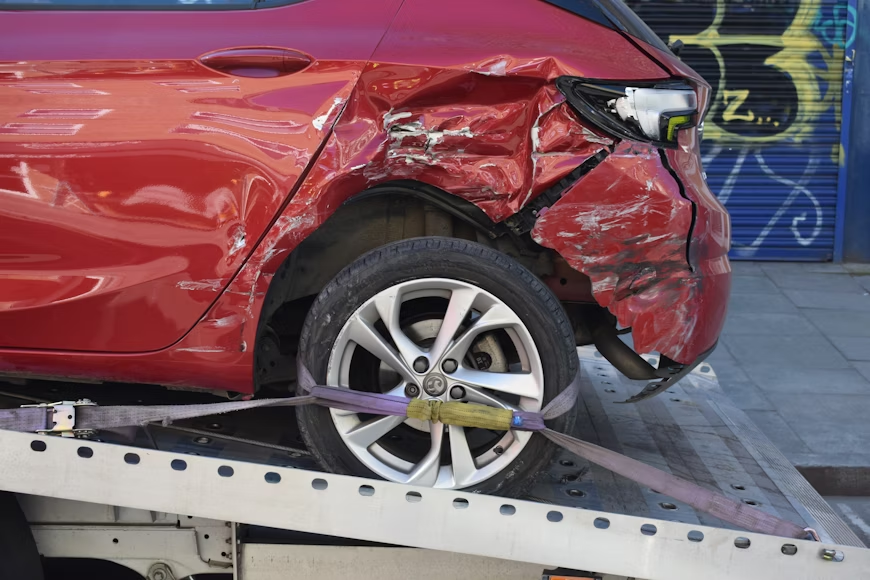
Every day, thousands of Indians commute on roads that are busier and riskier than ever before. With expanding traffic, varied vehicle types, and uneven infrastructure, road accidents have become a grim reality. The Motor Accident Claims Tribunal (MACT) exists to ensure that victims of such accidents—whether injured, disabled, or bereaved—receive fair and timely compensation. Set up under Chapter XII of the Motor Vehicles Act, 1988, MACT provides a dedicated quasi-judicial forum that is faster, more accessible, and less expensive than ordinary civil courts. Its creation marked a crucial step in humanizing India’s transport law, recognizing that behind every accident statistic lies a personal tragedy that demands redress. The full text of the Motor Vehicles Act is available on legislative.gov.in.

The fundamental purpose of MACT is to determine liability and award compensation in motor-accident cases arising from negligence, rash driving, mechanical failure, or road defects. It covers both death and injury claims, and its jurisdiction extends to passengers, pedestrians, drivers, and even third parties affected by vehicular accidents. Each district in India has one or more Tribunals presided over by a judicial officer of the rank of District or Additional District Judge. These tribunals function independently but follow procedural guidelines that emphasize speed and simplicity. Unlike civil courts, they are not bound by the strict technicalities of the Code of Civil Procedure; instead, they operate on principles of natural justice to ensure victims are not burdened by procedural complexities.
Filing a MACT Claim: Procedure, Types, and Compensation
Who can file a claim? Under Sections 166 and 140 of the Motor Vehicles Act, a claim may be filed by the injured person, by legal representatives of a deceased victim, or by property owners suffering loss. The process begins with a written application detailing the accident date, location, registration number of the vehicle, and the nature of injury or damage. Applicants are not required to pay high court fees, making MACT proceedings affordable for families already facing financial strain. Claims can be filed either in the jurisdiction where the accident occurred or where the claimant resides.
MACT claims are of two broad types—“no-fault” and “fault-based”. Under the no-fault principle (Section 140), compensation is awarded irrespective of who caused the accident: ₹ 50,000 for death and ₹ 25,000 for permanent disablement. This ensures immediate relief to victims without lengthy litigation. In contrast, fault-based claims (Section 166) require proof of negligence by the driver or vehicle owner. Here, compensation is assessed based on medical evidence, loss of income, future earning capacity, and other factors. Tribunals often rely on Supreme Court precedents, especially the landmark case Sarla Verma v. Delhi Transport Corporation (2009), which established standardized methods for computing compensation using age-based income multipliers.
The calculation of compensation under MACT involves both pecuniary and non-pecuniary damages. Pecuniary damages include hospital expenses, lost income, and rehabilitation costs, while non-pecuniary damages cover pain, suffering, and loss of consortium. In fatal cases, the Tribunal considers the deceased’s age, income, dependents, and prospects of future earnings. With the rise in private employment and gig-economy jobs, proving income has become complex, and lawyers play a vital role in substantiating earnings through bank statements, tax records, or witness affidavits. Tribunals also award interest—usually between 6% and 9% per annum—from the date of filing until realization, ensuring victims are compensated for delay.
Role of Insurance and Legal Representation in MACT Cases
A critical aspect of MACT practice is insurance liability. Under Section 146 of the Motor Vehicles Act, every vehicle must carry valid third-party insurance. In most cases, the insurer is directed to pay compensation and later recover from the negligent driver if required. However, disputes often arise over policy validity, driver licensing, or breach of conditions. Courts have developed the doctrine of “pay and recover,” ensuring that claimants receive compensation promptly while allowing insurers to pursue recovery separately. This balances humanitarian concern with contractual responsibility. The Supreme Court’s judgments in National Insurance Co. v. Swaran Singh (2004) and Pappu v. Vinod Kumar Lamba (2018) are key references for such situations.
The procedure before MACT is straightforward yet technical. After filing, notices are issued to the owner, driver, and insurer. They must respond within the prescribed time, failing which the Tribunal may proceed ex parte. Evidence is recorded through affidavits and cross-examination of witnesses. Medical reports and disability certificates are crucial in injury cases, while post-mortem reports and dependency proofs are essential in death claims. Once evidence closes, arguments are heard, and the Tribunal delivers an award, directing the insurer or respondent to pay compensation, usually within 30 days. Non-compliance can lead to attachment of bank accounts or property. Appeals against MACT awards lie before the High Court under Section 173 of the Act and must be filed within 90 days.
While the law is claimant-friendly, navigating MACT proceedings requires experience. Errors in pleadings, insufficient medical documentation, or delay in filing can reduce or forfeit compensation. At Law Wise, our MACT Law Team — led by Advocate Akash Janghu — specializes in representing accident victims and families before Tribunals across Delhi NCR and neighboring states. We begin each case with a detailed assessment of the FIR, site plan, mechanical inspection report, and insurance policy. Our lawyers coordinate with medical practitioners to obtain accurate disability evaluations and cost assessments. In fatal-accident cases, we assist families in gathering legal-heir certificates, proof of dependency, and income documentation to maximize legitimate claims.
Beyond litigation, Law Wise plays a proactive role in settlement negotiations with insurance companies. Many cases are resolved through Lok Adalats or pre-litigation mediation, where insurers agree to fair amounts without contesting liability. These settlements save victims years of waiting and avoid unnecessary legal costs. Our team also represents clients in appeals before the High Court, challenging inadequate awards or unjust denials. Because MACT jurisprudence evolves through continuous judicial interpretation, staying updated with the latest Supreme Court guidelines is essential—and that’s an area where our firm excels.
Recent reforms have sought to further simplify compensation. The Motor Vehicles (Amendment) Act 2019 introduced the Motor Vehicle Accident Fund, designed to provide compulsory insurance coverage for all road users, including hit-and-run victims. It also raised penalties for traffic violations and emphasized electronic monitoring of enforcement. These changes, along with digital claim-tracking systems being rolled out in states like Delhi and Maharashtra, are expected to speed up case disposal and reduce corruption. For victims, it means less paperwork and faster justice.
From a societal standpoint, MACT is not merely a forum for compensation; it is a cornerstone of road-safety awareness and accountability. Each claim acts as a deterrent, reminding drivers, vehicle owners, and corporations of their legal and moral responsibility. It also reflects the judiciary’s sensitivity toward the plight of common citizens—daily wage earners, delivery riders, commuters—whose lives can change in seconds due to negligence. The Tribunal’s power to award “just compensation” is grounded in Article 21 of the Constitution, which guarantees the right to life with dignity.
For claimants, the most practical advice is to act swiftly. An FIR should be lodged immediately after the accident, followed by medical examination and documentation of expenses. The limitation period for filing a claim was removed in 1994, but prompt filing ensures fresher evidence and better results. Always engage a lawyer experienced in MACT practice rather than approaching touts or middlemen. Legal representation ensures procedural compliance and ethical handling of funds, especially when compensation is deposited in fixed accounts for minors or dependents.
Law Wise’s MACT Legal Services and Road Safety Advocacy
At Law Wise, we combine compassion with legal rigor. Our lawyers not only pursue maximum compensation but also help families with post-award formalities such as bank account verifications, guardianship applications, and enforcement of recovery. We coordinate with police, hospitals, and insurance investigators to streamline documentation. For corporate clients managing vehicle fleets, we offer risk-assessment audits to ensure compliance with insurance norms and safety protocols, minimizing exposure to future claims.
The evolution of MACT law reflects India’s growing recognition of road safety as a public-policy priority. With rising vehicle ownership, stronger laws and efficient tribunals are indispensable. Yet, legal machinery alone cannot prevent accidents; civic responsibility and driver education remain equally vital. Through our legal initiatives and community outreach, Law Wise continues to advocate for safer roads and responsible driving.
In conclusion, the Motor Accident Claims Tribunal represents hope for millions affected by road tragedies. It bridges the gap between justice and accessibility, ensuring victims are not lost in bureaucratic delay. The system may still have imperfections, but its intent is noble and its impact undeniable. If you or a loved one has been involved in a road accident, understanding your rights under MACT can make the difference between despair and justice. With experienced representation from Law Wise’s accident-law experts, you can navigate the process confidently and secure the compensation you rightfully deserve. To schedule a consultation or learn more, visit our Law Wise Contact Page. Justice on wheels should not stop at the accident site—it continues until every victim is heard, compensated, and restored with dignity.

.png)